



After years of technological accumulation and market validation, sodium ion batteries have entered a golden turning point from industrial germination to large-scale implementation. As an innovative pioneer in the field of sodium electric materials, Na Yuan New Materials, with its independently developed NFS (Sodium Iron Sulfate) material, has broken through the bottleneck of sodium electric industrialization with core advantages such as ultra-low cost, ultra long cycle, ultra-high safety, and green recyclability, and has built a unique technological barrier and industrial competitiveness on the global new energy track.
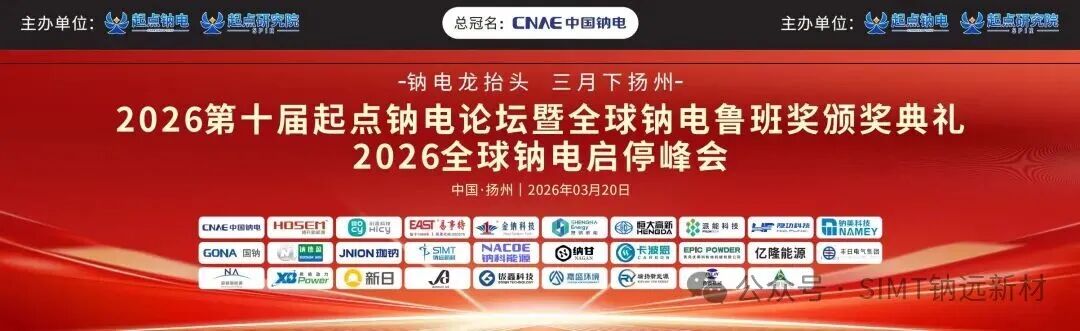
On March 20, 2026, sponsored by Qidian Sodium Electricity and Qidian Research,The 2026 (10th) Qidian Sodium Electricity Forum and Global Sodium Electricity Technology Application Luban Award Ceremony, sponsored by CNAE China Sodium Electricity General, as well as the Global Sodium Electricity Start Stop SummitThe grand event will be held at the Baoying Jinling Hotel in Yangzhou.
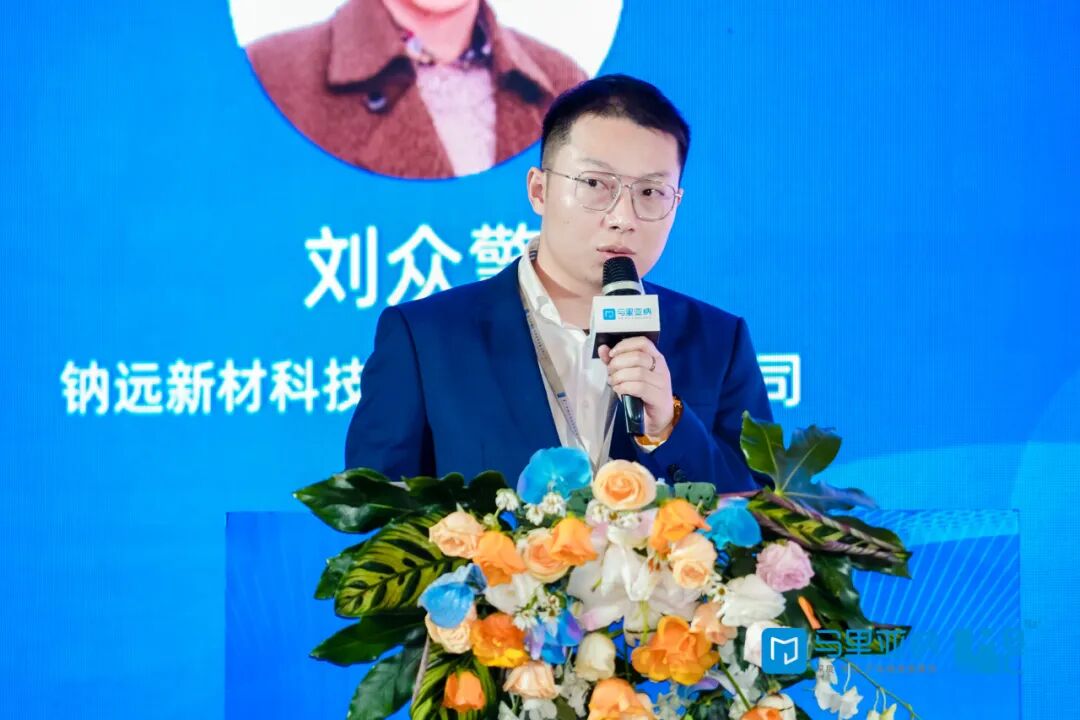
At the conference venue, Dr. Liu Zhongqing, Chairman of Nayuan New Materials, delivered a speechDevelopment and Application of Polyanion Positive Electrode Material NFS for Sodium Ion BatteriesTheme speech, in-depth analysis of the technical core and industrial value of NFS materials.
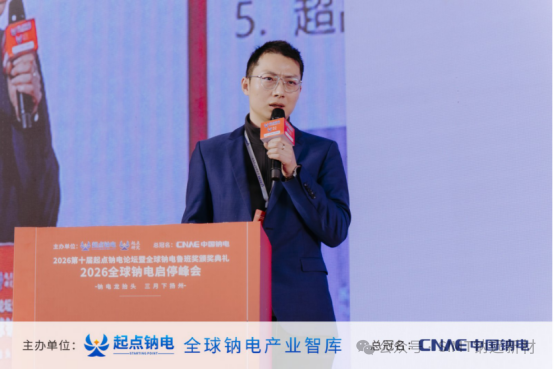
Image: Dr. Liu Zhongqing, Chairman of Na Yuan New Materials
01. The turning point of the industry has arrived: Sodium electricity is moving from "technical verification" to "scale takeoff"
Since the release of the first generation sodium ion battery by CATL in 2021, the sodium battery industry has experienced five years of ups and downs, especially the market volatility caused by the sharp decline in lithium prices from 2024 to 2025, which has led to a deep transformation in the industry's understanding of sodium batteries. Nowadays, sodium batteries have already surpassed the simple positioning of 'lithium battery supplement', and have formed absolute advantages in low-temperature performance, overcharging rate, safety, and ultra-low cost, becoming an indispensable core technology route in the field of new energy
Dr. Liu Zhongqing stated. Currently, the signal of industrial scale is becoming increasingly clear:
Top enterprises are accelerating their layout, and CATL has successively launched lithium sodium blended hybrid batteries and will soon mass produce sodium new batteries; The international market is heating up synchronously. The EU's energy storage plan "Battery 2030" supports sodium ion batteries, and by 2026, sodium ion batteries will be included in the core industrial development plan. The United States has zero tariffs on sodium batteries and related materials.
From a cost perspective, even if lithium prices fall below 150000 yuan/ton, the BOM cost advantage of sodium electric materials is still significant. In segmented scenarios such as start stop and light power, lithium sodium prices have inverted, and sodium electric has truly ushered in the era of large-scale takeoff.
Dr. Liu Zhongqing believes that the global market size of sodium battery materials is expected to exceed 500 billion yuan. With the full chain advantage accumulated by the lithium battery industry, China has taken the leading position in the development of sodium batteries worldwide. "We have achieved the world's first in lithium batteries, and sodium batteries will inevitably be at the forefront of the world.
02. Technical route selection: Focus on NFS sodium iron sulfate and create differentiated core competitiveness
Faced with the three major sodium positive electrode technology routes of layered oxide, Prussian blue, and polyanion, Na Yuan New Materials has undergone in-depth research and development verification, and finally locked in the polyanion ferric sulfate sodium (NFS) system. This decision stems from precise control of industry demand and technological potential. In the early stages, the company deeply cultivated layered oxides and solid electrolytes and achieved industry-leading results, while simultaneously developing a series of polyanion materials.
The sharp drop in lithium prices in the later stage has a certain impact on the entire industry, and we will shift our main focus to NFS materials to meet industry demand. With further research, it was found that although NFS has its application barriers, it has multiple irreplaceable values. Therefore, NFS hard additives were developed simultaneously to promote industry applications. ”Dr. Liu Zhongqing introduced.
The core advantage of NFS materials is first reflected in their voltage adaptability - in systems such as polyanions and layered oxide O3,The only way to fully adapt to the 2.6-4.2V ternary voltage systemIt can directly connect with existing iron lithium and ternary battery production lines, significantly reducing the cost of downstream application production line transformation and technology adaptation.
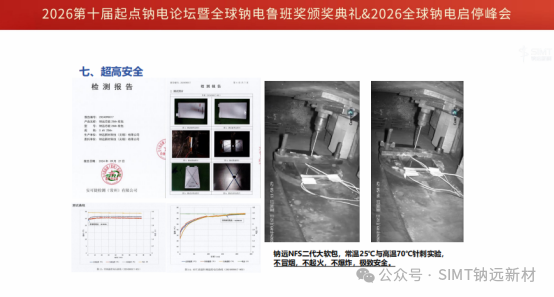
Next is ultimate security. NFS material, as a stable chemical derivative material, has inherent safety properties: whether tested at room temperature or high temperature of 70 ℃, the battery cells can achieve bothNo smoke, no fire, no explosionOnly leaving traces of needle holes, completely solving the safety pain points of new energy batteries, providing reliable guarantees for scenarios such as in car, energy storage, and consumer electronics.
What is more significant for industrial transformation is full lifecycle recyclability. Currently, neither lithium nor lead-acid batteries have achieved true full lifecycle greening
Lithium iron phosphate has an annual shipment of 4 million tons, but only 250000 tons are directly recycled. The theoretical scrap amount is far greater than the actual recycling and processing amount, and a large amount of material becomes black powder. After acid washing and alkali extraction of lithium, a large amount of iron phosphate accumulates due to low prices, causing resource waste and environmental pressure. As a water-soluble "soft material", NFS sodium iron sulfate can be directly dissolved in water for low-cost recycling, completely avoiding the complex recycling process and pollution problems of traditional batteries.
At the same time, NFS materials are deeply compatible with China's resource endowment: tens of millions of tons of iron sulfate and sodium sulfate are produced annually in China (1 ton of lithium carbonate is accompanied by 10 tons of sodium sulfate), and NFS materials can be directly produced relying on chemical by-products and industrial waste to achieveResources - Materials - Applications - Recycling - MaterialsThe full chain green closed-loop not only reduces raw material costs, but also practices the concept of green and low-carbon development. Cost is the core key to the implementation of industrialization.
Compared to the mainstream LFP lithium iron phosphate system, the sodium far NFS second-generation battery pack has a direct overall cost compared to LFPReduce by 30%With the support of large-scale production, further widening the price gap. Relying on the abundant resources of domestic by-products such as iron sulfate and sodium sulfate chemical products, NFS raw materials are well supplied with low unit prices, combined with water-soluble closed-loop production processes, to build the ultimate cost advantage from the source and perfectly adapt to affordable and essential demand tracks such as light power and start stop power.
Relying on continuous iterative research and development, the second generation NFS soft package product of Na Yuan has achieved a comprehensive performance leap, with excellent data performance:
At room temperature of 25 ℃, the capacity retention rate of the full electric cycle is still 5000 cycles≥80%In a harsh environment with a high temperature of 45 ℃, the capacity retention rate remains stable after 2000 cycles≥80%The performance in the high-pressure range is equally impressive,High voltage platform above 3.6V,Discharge at 10C rate for 30 secondsAfter 2000 cycles, the capacity retention rate is close to 100%, with almost no attenuation. The combination of ultra-high rate and ultra long cycle enables the NFS second-generation to perfectly adapt to the high rate discharge requirements for start stop operation. The high-voltage platform further enhances the energy output efficiency under the same operating conditions, balancing durability and power performance.
Technological breakthrough: No negative electrode+solid-state layout, unlocking new heights in sodium electricity energy density. In response to the common problems of low first efficiency and limited energy density in the sodium electricity industry, Sodium Far New Materials uses NFS material as the core and layouts negative electrode free, semi-solid, and all solid state technologies to achieve a leapfrog performance improvement.
As a porous material, the hard carbon negative electrode will consume about 30% of sodium ions during charging, resulting in a theoretical capacity of 100mAh/g for NFS material, but the actual discharge is only 60-70mAh/g, and the energy density is greatly reduced. ”Dr. Liu Zhongqing frankly stated that NFS material is highly compatible with non negative electrode technology and can achieve full charge discharge, with a theoretical capacity of 100mAh/g and complete release, making energy density easyBreakthrough 220Wh/kgDirectly surpassing the level of lithium iron phosphate.
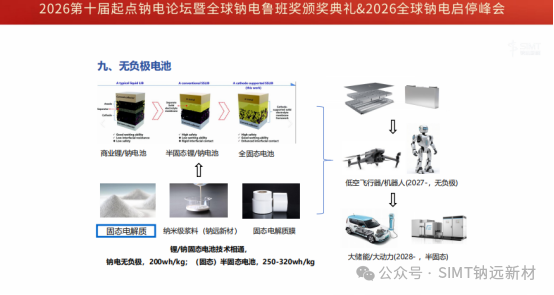
On this basis, Na Yuan New Materials continues to optimize its technical parameters to reduce the voltage of non negative electrode batteriesfromUpgrade from 3.6V to 3.7VFurther explore the energy efficiency potential of NFS materials. We do not blindly pursue ultra-high energy density of 300-400Wh/kg, but focus on scenario specific needs - the core of semi-solid and all solid state is to improve safety and adapt to high temperature scenarios in vehicles;
Non negative electrode technology focuses on energy density and serves fields such as consumer electronics, robotics, and low altitude aircraft, forming a multi-level technological layout. ”At present, the cycle life of Na Yuan New Material's non negative electrode battery has been extendedBreakthrough 1000 lapsTo meet the application needs of most scenarios, continuous breakthroughs will be made in the next 3-5 years, promoting significant technological leaps in the next generation of sodium ion batteries.
03. Industrialization landing: The transformation of industry, academia and research has been completed, and the production capacity of 10000 tons supports global demand
As a science and technology innovation enterprise established in 2022, Na Yuan New MaterialsTechnology+IndustryTwo wheel drive, achieving a leapfrog development from research and development to mass production in just four years. The core team of the company is the "German team", with R&D personnel accounting for over 40%, all of whom are professionals in the field of new energy. Dr. Liu Zhongqing is a former researcher at the Oxford University Institute of Advanced Study and has been deeply involved in the field of battery materials for many years. In 2024, Na Yuan New Materials was awarded the title of National High tech Enterprise and established its headquarters, R&D center, and engineering technology center in Wuxi, building a complete R&D system.
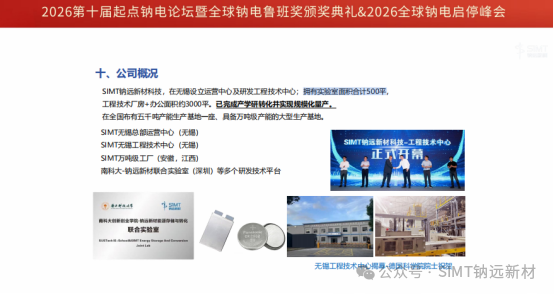
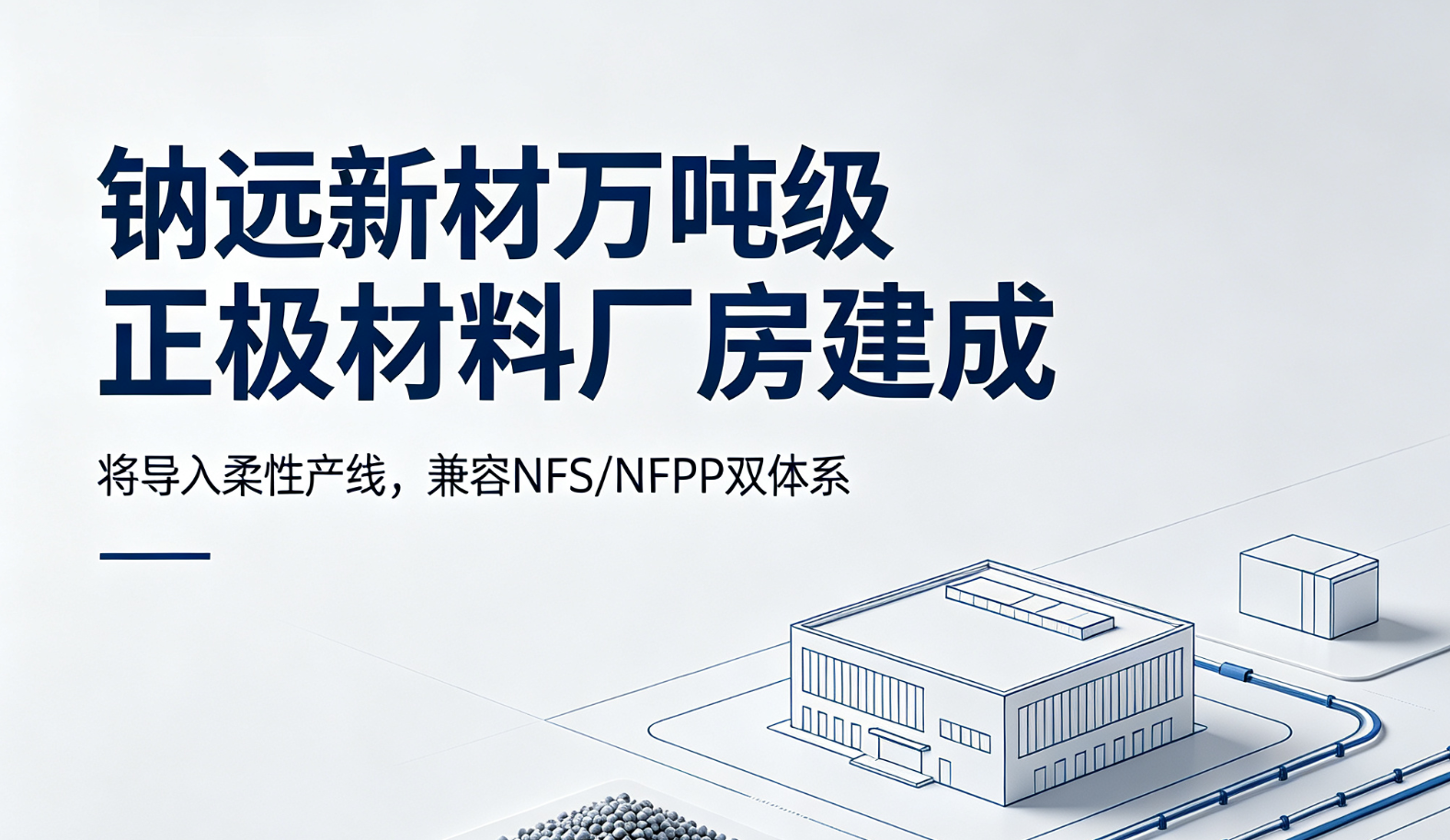
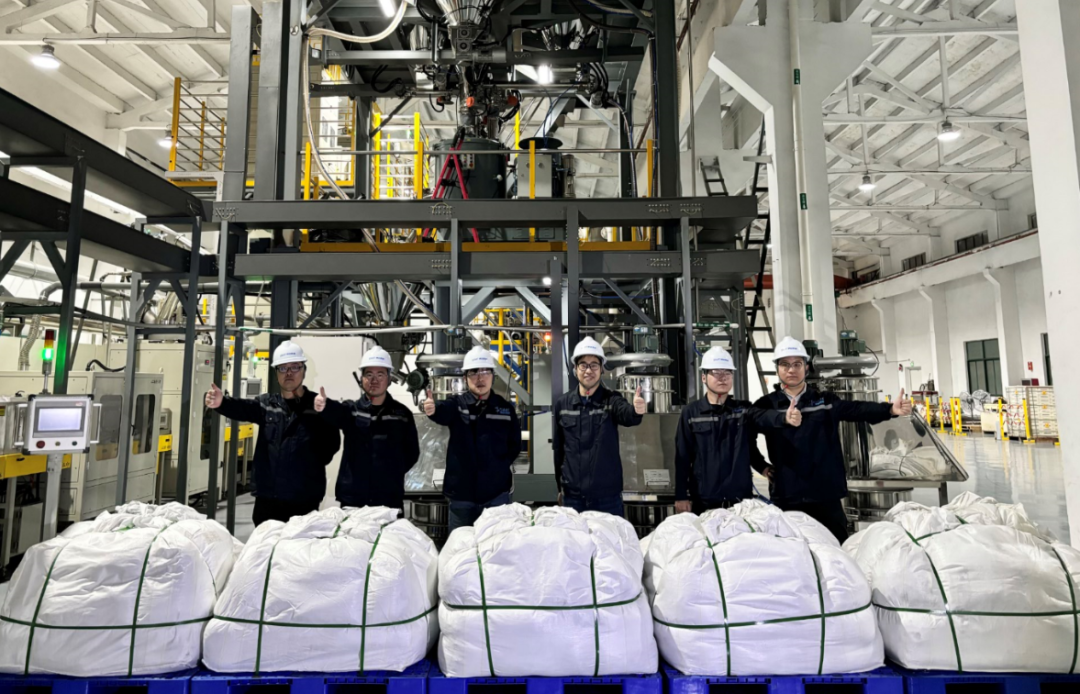
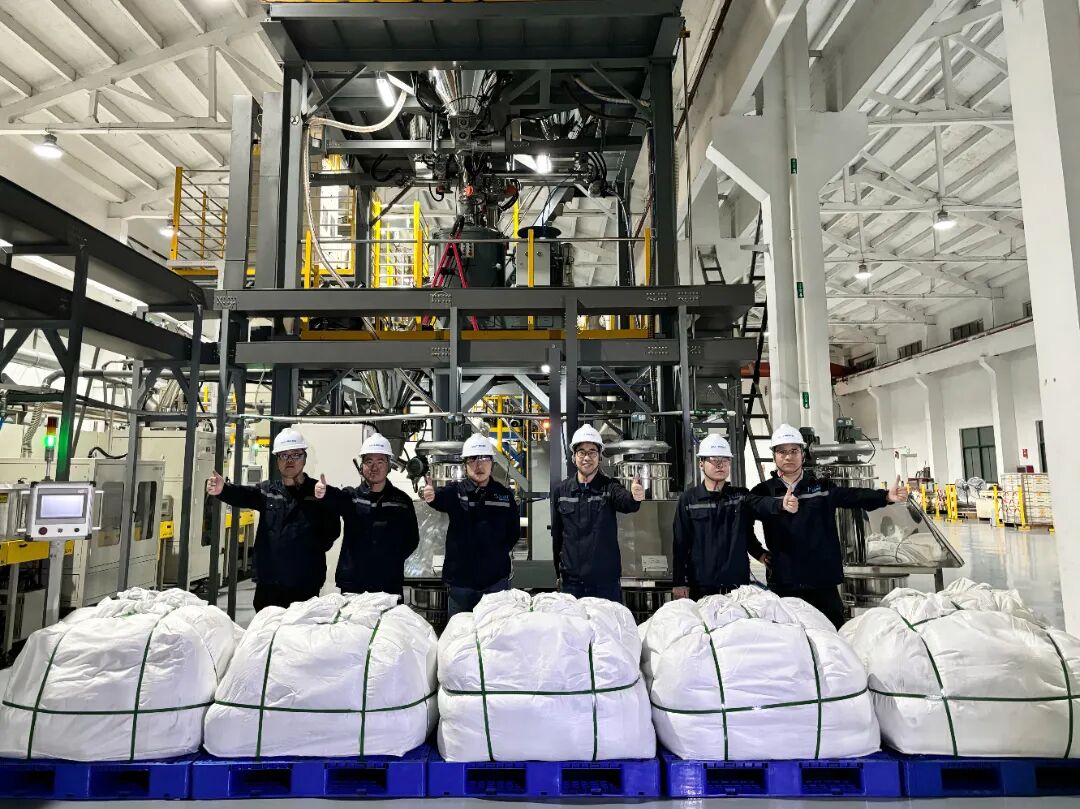
In terms of industrialization, Na Yuan New Materials has completed the full system industry university research transformation and large-scale production of NFS materials:Jiangxi 5000 ton production line achieves full productionAnhui's 10000 ton new factory is accelerating its construction, while building multiple joint technology research and development platforms to promote materials, battery cells PACK、 The full chain collaboration of terminal applications and recycling systems.
From chemical waste recycling materials, to NFS system materials, to non negative electrode and solid-state battery technology, we have formed a complete industrial ecological loop that can meet the needs of large-scale market applications
From the perspective of industry recognition, Na Yuan New Materials has achieved technological breakthroughs with NFS materials, winningChina Sodium/Lithium Battery Materials Conference Technology Innovation Breakthrough EnterpriseTitle: Dr. Liu Zhongqing was awardedYoung Talent AwardThe product has been recognized by domestic and foreign top customers and has become a benchmark enterprise in the field of sodium electrical materials.
04. Looking ahead to the future: Empowering the industry with technological innovation and jointly building a new global sodium electricity ecosystem
The golden age of sodium electricity has arrived, and Na Yuan New Materials will focus on NFS materials, continue to deepen technological innovation and industrialization, and work together with industry colleagues to overcome development bottlenecks. ”Dr. Liu Zhongqing stated that the company will leverage its four major advantages of cost, safety, recycling, and adaptability to deeply cover scenarios such as lightweight power, start stop power, energy storage, and consumer electronics. At the same time, the company will accelerate its international market layout and help China's sodium battery technology lead the world.
Standing at the forefront of the transformation of the new energy industry, Na Yuan New Materials uses NFS materials as its cutting edge to break the shackles of sodium electricity industrialization, and provides a "Chinese solution" for global energy transformation through a closed-loop model of the entire industry chain. In the future, with technological iteration and scale advancement, NFS materials will inevitably become the core pillar of the sodium power industry, promoting the new energy industry to move towards a new stage of high-quality development that is safer, more economical, and more environmentally friendly.
Article source: Starting point sodium electricity, author: Starting point observation