



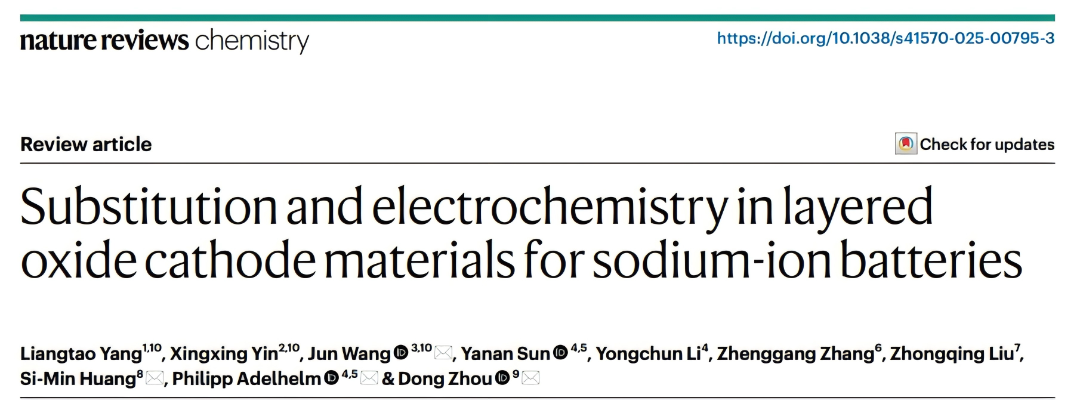
Recently, the top international chemistry review journal Nature Reviews Chemistry published an authoritative review paper online on positive electrode materials for sodium ion batteries. As one of the core publishing units, SIMT New Materials Technology (Wuxi) Co., Ltd. (SIMT) has jointly provided cutting-edge knowledge and practical support from the Chinese industry for the global sodium positive electrode material technology roadmap through gene editing and modification of materials.
01. "Element Substitution": Performing "Gene Editing" on Materials
Element substitution is quietly changing the fate of sodium ion batteries.
Just as humans can correct defects and enhance advantages through gene editing, advanced materials scientists precisely regulate the structure and properties of materials by introducing different elements. In the design concept of sodium positive electrode materials, the materialEdit genesBy modifying the composition of battery materials at the atomic level through intricate structural design, the obtained sodium positive electrode material becomes stronger, more durable, and safer - this is no longer a plot in science fiction, but an ongoing scientific revolution. The answer is hereElement substitution。
Based on the publication of the Nature series of articles, the research results of Na Yuan New Materials have systematically sorted out the basic design criteria for element substitution modification (i.e. obtaining the key to opening the "gene editing" of materials), opening the door for the industry to rationally design high-performance sodium positive electrode materials.
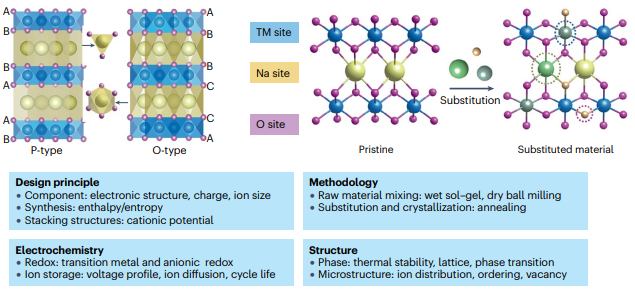
What can replace modification do?
Stable structure: By introducing specific elements, such as building a "steel skeleton" inside the material, structural collapse during material cycling is suppressed.
Capacity enhancement: By doping with special structures, anionic redox reactions are activated, allowing oxygen ions to participate in charge compensation and provide additional capacity.
Accelerate diffusion: Expand the sodium ion diffusion channel, allowing ions to "run" faster and achieve rapid charging and discharging.
Extend lifespan: Inhibit harmful phase transitions, reduce lattice parameter changes, and make materials and batteries more durable.
02. From Laboratory to Mass Production: The Exploration Path of Sodium Yuan New Materials
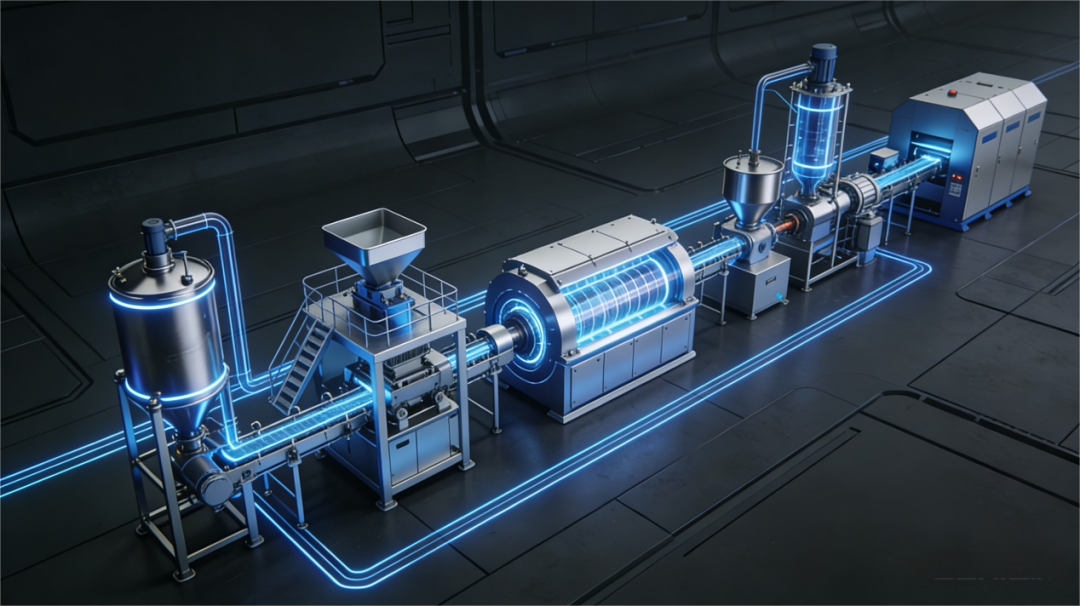
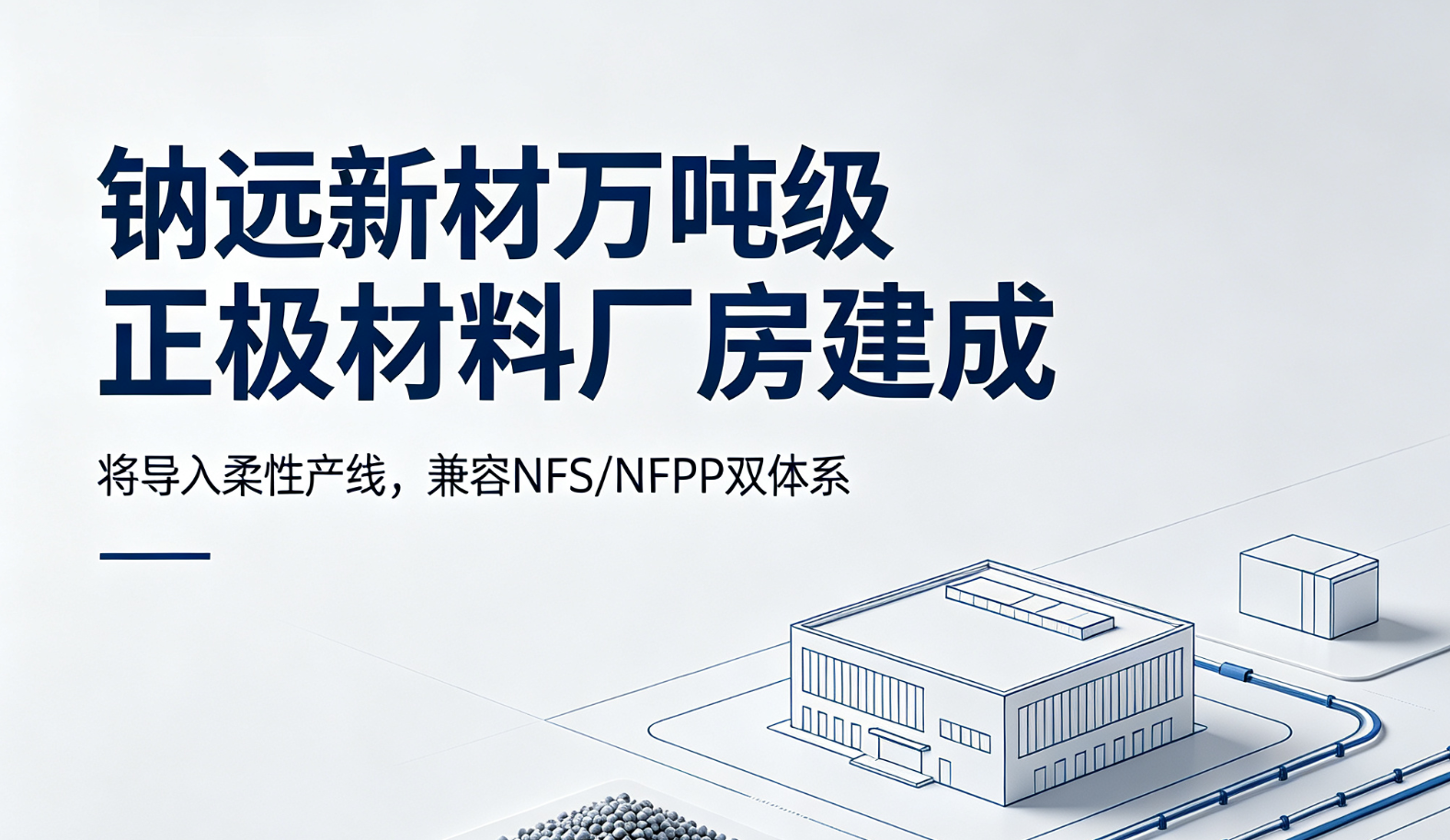
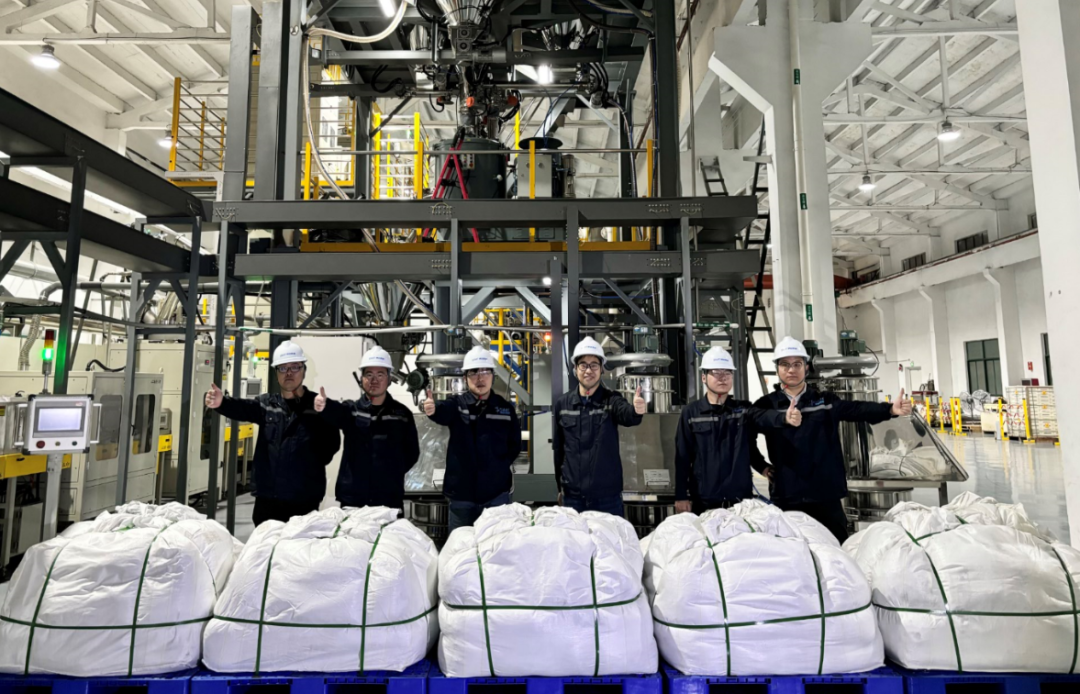
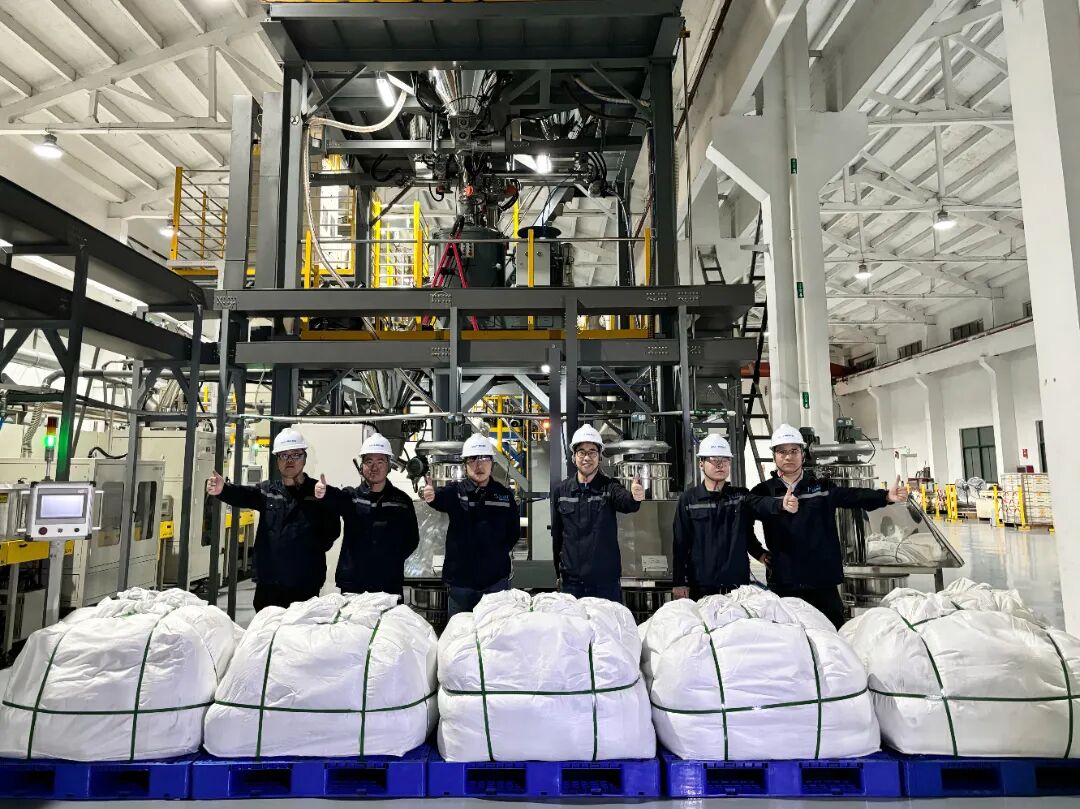
Established in March 2022, with a focus on "sharpening a sword in three years", Na Yuan New Materials takes the deep integration of industry, academia, and research as its core, building a full chain system of "research and development pilot production", and connecting the transformation path of sodium electric materials from laboratory to large-scale implementation. The company has relied on the Wuxi Frontier R&D and Engineering Technology Center to complete technical research and pilot testing, and achieved commercial batch delivery through the Jiangxi 5000 ton NFS production line. At the same time, it is promoting the construction of Anhui's 10000 ton production line and accelerating the industrialization of cutting-edge scientific research achievements through a stepped production capacity layout.
As a core participating unit in Nature Reviews Chemistry, the company's R&D team has demonstrated with an international perspective and advanced scientific research capabilities that Na Yuan New Materials is not only committed to industrialization, but also contributes "Chinese wisdom" at the level of basic science. Furthermore, based on the foundation of positive electrode materials in the early stage, the company is actively laying out the next generation of non negative electrode battery technology, relying on mature and verified material systems and industrialization capabilities, continuously breaking through the upper limit of energy density of sodium battery systems, and creating a complete solution for the next generation of sodium battery that combines cost and performance advantages.
03. From "substitution" to "symbiosis": the broad prospects of sodium ion batteries
The industrial positioning of sodium ion batteries has evolved from initially breaking the constraints of the lithium resource supply chain and replacing traditional lead-acid batteries as a supplementary solution, to a value upgrade that complements and synergizes with lithium battery scenarios. Based on their own performance endowments, the two have formed a clear differentiated scenario division of labor, jointly building a new energy electrochemical system that covers all scenarios, is high in safety, and low in cost, opening up vast long-term growth space.
As a pioneer and leader in the field of sodium electrolyte polyanion NFS positive electrode materials, Na Yuan New Materials is deeply aligned with the industry's development trend, and through the deep integration of industry, academia, and research, connects the path of technology achievement transformation. Relying on Wuxi's cutting-edge research and engineering technology center, it completes the bottom layer technology research and development and pilot testing of materials, and achieves large-scale and stable delivery of core materials through production lines in Jiangxi and Anhui. Based on a mature positive electrode material system, it prospectively lays the foundation for the next generation of non negative sodium battery technology. With continuous bottom layer technology innovation and stepped production capacity layout, it consolidates the core foundation of the commercial development of the sodium battery industry, continuously releases core value in the process of the sodium battery industry moving from "substitution" to "symbiosis", and helps to build a new pattern of sodium lithium synergy, independent and controllable new energy industry.
Na Yuan New Materials adheres to the rigorous spirit of German industry and the efficient execution of China, and works diligently in the world of material design and element substitution, contributing to the commercialization of sodium ion batteries.