



Introduction:In the race of industrialization of sodium ion batteries, the technical route of positive electrode materials has never stopped. Layered oxides, Prussian blue analogues, polyanionic compounds... who canEnergy density, safety, costAchieving the optimal balance in the three dimensions? The answer given by Na Yuan New Materials is——Modified Sodium Iron Sulfate (NFS)A new type of polyanion positive electrode material based on exclusive "soft hard combination" modification technology is redefining the cost-effectiveness boundary of sodium electricity.
1、 Product positioning: Targeting essential scenarios, balancing performance and cost
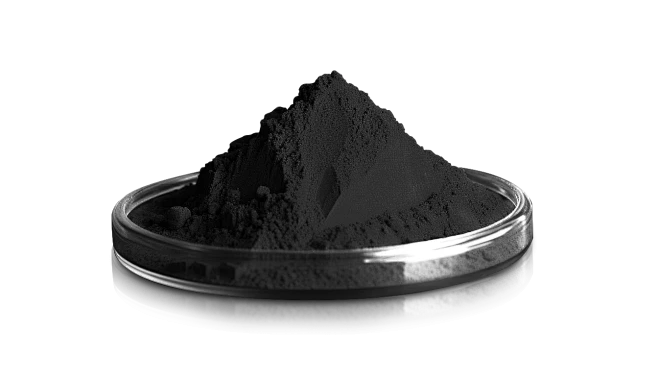
The core product of Na Yuan New Materials isModified Sodium Iron Sulfate (NFS)It belongs to a new type of polyanion sodium ion positive electrode material system. The original intention of its design is not to pursue the ultimate goal of a single indicator, but to achieve it through material genetic engineeringHigh voltage, high voltage, high safety, extremely low cost, easy to recycleMultidimensional balance. Relying on its self-developed "soft hard combination" core modification technology, NFS has been able to accurately adapt to the industrial landing needs of various scenarios such as lightweight power, UPS power supply, start stop system, energy storage power station, etc.
2、 Core Technology: Exclusive "Soft Hard Combination" Modification Solution, Cracking the Natural Shortcomings of NFS
Although traditional pure phase sodium iron sulfate (NFS) has inherent advantages such as cheap raw materials and high voltage, it has long been plagued byLow compaction density (1.8-2.0 g/cm ³), rapid decay during high temperature cycling, and gas production bulgingThe three major industry diseases. Sodium Yuan New Materials innovatively proposesDesign scheme of "soft hard combination" of main materials and special additives——It is not a simple physical mixing, but the introduction of a "skeleton" type hard additive from the crystal structure level to reconstruct the internal ion transport channels and mechanical stability of the material.
List of Core Breakthrough Data:
indicator | Pure NFS (unmodified) | NFS system material (with added sodium far hardening additive) | increase margin |
Polar compaction density | 1.8~2.0 g/cm³ | 2.4~2.7 g/cm³(Maximum achievable) | Increase by 20%+ |
Gram capacity | 80~90 mAh/g | Up to 110 mAh/g (adjustable) | Increase by 22% to 37% |
High temperature (45 ℃+) cycle life | ≪ 1000 times (fast decay) | Breakthrough 2000 times | Increase by more than 1 times |
High temperature cycling capacity decay rate (2000 cycles) | Unable to achieve | ≤ 20% (requires coordination with battery cell design) | significantly improved |
Gas production issue | SO₂ Severe bulging | Effectively suppress and solve the root cause | Change in safety nature |
rate capability | Conventional magnification, significant attenuation above 4C | Suitable for 4C charging/10C discharging | Suitable for high magnification scenarios |
This technology not only builds a solid patent barrier, but also elevates NFS from a "low-end backup material" to a "high-end scene optional material".
3、 Voltage platform and energy density: 3.6-3.7V high voltage, directly targeting the 200 Wh/kg target
The stable voltage platform of Sodium Far NFS reaches up to3.6V-3.7, higher than Prussian white (about 3.1-3.2V), and even better than some layered oxides (about 3.3-3.5V). The high voltage platform directly converts into higher battery energy density:
Conventional cell designEnergy density can reach 120 Wh/kgabove(Improved by about 20% compared to pure NFS);
Paired with a non negative sodium battery systemTheoretical energy density can be broken through 200 Wh/kgProvide a practical and feasible positive electrode solution for the next generation of high-energy sodium batteries.
4、 Safety performance: thermal stability and needle puncture testing, no fire, no explosion
Safety is the first red line in energy storage and power scenarios. NFS itself has a stable covalent bond structure, and its thermal decomposition temperature is much higher than that of layered oxides. Sodium Far New MaterialsNormal temperature needle puncture, high temperature needle puncture, and even fully charged disassembly in air environmentsIn extreme tests, modified NFS showed No fire, no explosion Excellent characteristics. Meanwhile, due to the fact that additives fundamentally inhibit SO₄²⁻The decomposition of functional groups during the cycling process produces gas, significantly reducing the risk of battery bulging and leading the industry in terms of safety.
5、 Cost advantage: Raw materials come from industrial by-products
Selection of raw materials for the production of Sodium Far NFS Ferrous sulfate, sodium sulfate We do not rely on precious metals such as cobalt, nickel, and vanadium as by-products of large-scale industries. After large-scale modulus production, the overall BOM cost is much lower than other materials. Horizontal comparison:
Only40% of NFPP cost;
Only25% of the cost of layered oxides;
Equal to or even lower than the cost of Prussian white.
This cost structure makes NFS highly penetrable in price sensitive markets such as large-scale energy storage and two wheeler battery swapping.
6、 Green closed-loop: Good water solubility, recycled and regenerated color
Unlike traditional positive electrode materials that require strong acid or high-temperature pyrometallurgical recovery, sodium iron sulfate hasGood water solubilityThe separation and recovery of valuable metals (iron, sodium) can be achieved through a simple water immersion process, and the residue can be treated harmlessly. This feature makes NFS naturally compatibleGreen closed-loop reproduction The trend of environmental protection not only reduces carbon emissions throughout the entire lifecycle, but also brings additional economic value for recycling.
7、 Comprehensive coverage of application scenarios: from lightweight power to high-end energy storage
Based on the comprehensive performance improvement after modification, the Na Yuan NFS system material has broken free from the rigid label of "limited to low-speed electric vehicles" and can now be fully adapted to:
Lightweight powerTwo wheel/three wheel electric vehicles (high magnification, long cycle requirements);
UPS power supply& Start stop power supplyHigh safety, high reliability, wide temperature range;
Electric energy storageHousehold energy storage, industrial and commercial energy storage (low-cost, long-life, thermal stability);
Special high temperature scenarioSuch as backup power in the computer room and outdoor base stations (with a cycle life of over 2000 times above 45 ℃).
In contrast, unmodified pure NFS can only be used for low-speed vehicles or small energy storage with lower performance requirements, and is far from reaching the high-end market mentioned above.
8、 Summary: Modified NFS - the "Hexagonal Warrior" of Sodium Electropolyanion Route
Through its unique "soft hard combination" additive technology, Na Yuan New Materials has accurately addressed the three major shortcomings of traditional sodium iron sulfate, namely compaction, high-temperature cycling, and gas production, while retaining its properties Ultra high voltage, ultimate cost, intrinsic safety, easy recycling Natural genes. In the dilemma of "cost priority" and "performance upgrade" for positive electrode materials in sodium ion batteries, modified NFS provides an almost optimal compromise solution - even forming a backlash in certain dimensions such as voltage and safety.
For battery cell companies, energy storage integrators, and two wheeler manufacturers, the NFS system material from Na Yuan New Materials is not only a cost reducing alternative, but also the key to opening up new application scenarios. With the maturity of non negative sodium battery technology, its energy density potential of 200 Wh/kg is expected to push sodium batteries from "low-end substitution" to a new height of "mainstream competition".